
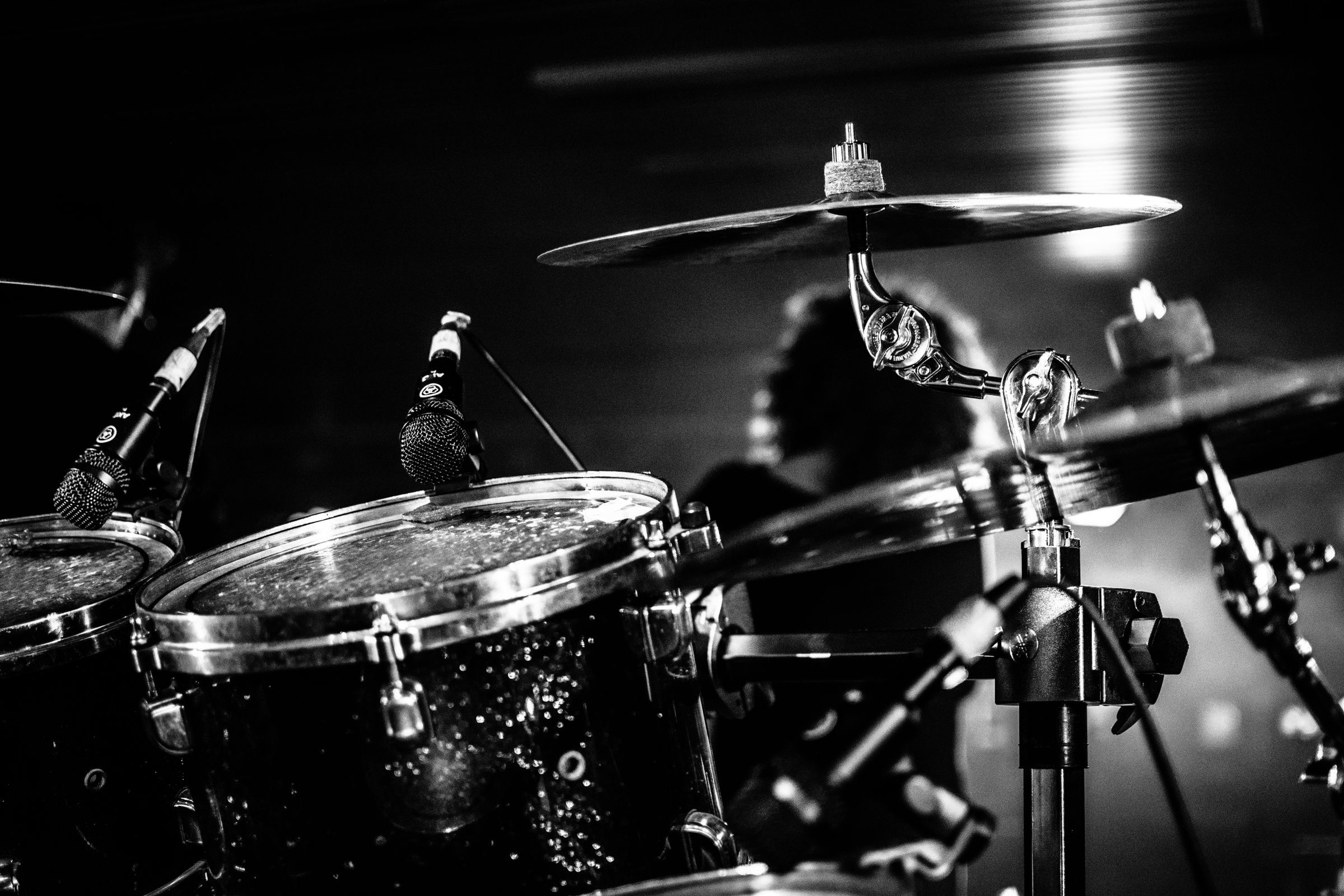
The idea that less is more has always sat near the centre of what I do. This year I finally understood where it came from, and it was not design school. It was a drum kit.
I have played drums since I was thirteen, since a kit arrived under the tree at Christmas in 1997 and quietly rearranged my life. Music taught me a rule long before design did, the one every drummer lives by: keep it simple. A part that serves the song is worth more than one that only shows off. Somewhere this year the two halves of me met, and the rhythm and restraint I had learned behind a kit turned out to be the same discipline I had been reaching for at the desk.
That is when it clicked. Design is less about what you put in and more about what you leave out, and about how you leave it out. For an early designer forever tempted to experiment, which usually means adding, that was a hard turn to make.
It arrived at a particular moment. After four years running my own freelance practice, riding the feast and the famine, I decided I had a great deal to learn by working inside something larger than myself. So I looked for full-time work and landed at Covenant Health. A woman named Carol hired me, into the library department of all places, and I started as an audiovisual technician, pushing carts of equipment down the corridors of the Grey Nuns and, in the quiet moments, showing what design could do.
A hospital asks for restraint in a way little else does, and that year I took more of the ego out of my work than I ever had. Minimalism stopped being a style and became a form of respect — respect for the people teaching me, and for the people, some frightened, some grieving, on the other side of every sign and every page. I learned to make things quieter on purpose.
The hardest thing for me to leave out has always been the clever bit, the flourish that asks a viewer to think a little too hard. In the early days those went in, and people did not always get them, and I found myself explaining what I had made, which I hated. So I began cutting, and cutting, until one day I looked at a piece and saw I had cut too far. There was no brand left, only a name and a logo sitting alone, with nothing to connect them.
That is the lesson I want to keep. There is a point where minimalism removes too much, and the craft is knowing what goes in, where it goes, how, and why. My restraint is not minimalism for its own sake. Every element I keep is there to do a specific job, and set where it can do that job best. Aces in their places. Only the main actors, never a secondary one crowding the frame.
Less, but better, then, is not about having little. It is about earning the things that remain. Music taught me the rhythm of it, and a hospital taught me the humility of it, and together they handed me the principle I still bring to everything: keep only what serves, and give it room to be heard.