
I would like to confess something, and to do it with the help of two philosophers and one colleague who found me very funny.
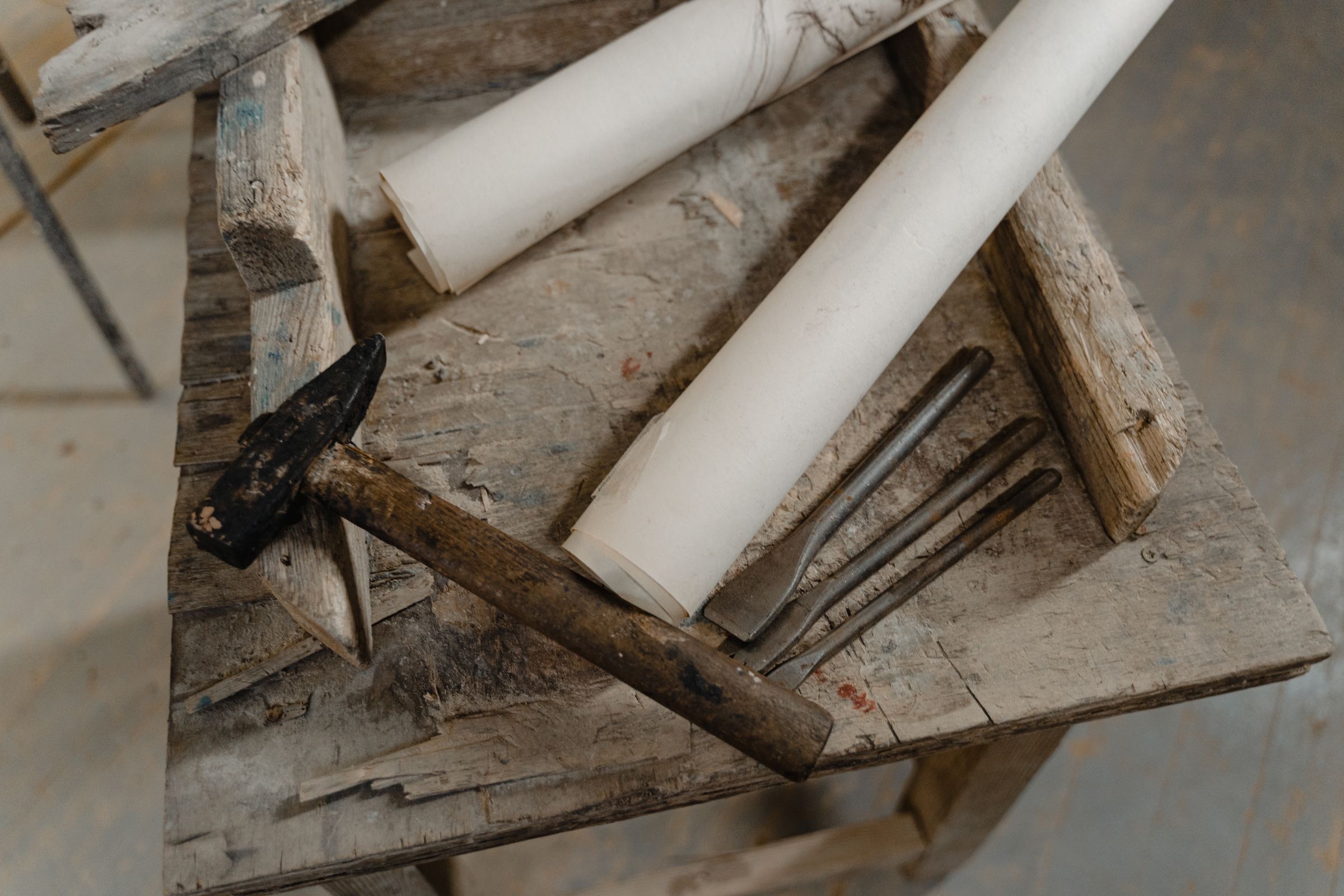
In 1964, in a book called The Conduct of Inquiry, Abraham Kaplan described what he named the law of the instrument. Give a small boy a hammer, he wrote, and he will find that everything he encounters needs pounding. Two years later, Abraham Maslow put it more memorably in The Psychology of Science. I suppose it is tempting, he said, if the only tool you have is a hammer, to treat everything as if it were a nail.
I have a mentor who used to make this joke at my expense, lightly and often, and he was entirely right to. Because my hammer is Figma, and I use it for just about everything.
Presentations. Documents. Diagrams. Flowcharts. Things that are unmistakably a spreadsheet. Once, I think, something that should have been a piece of paper. You need a screw put into a wall, and I will look at it, and get out my hammer, and make it work, and it will look rather good, and it will still have been a hammer.
The honest question is when this becomes a problem, and I think the answer is subtler than the joke suggests. A tool you know deeply is genuinely faster than a better tool you know poorly. Mastery has real value, and switching costs are not imaginary. There is a case for the hammer.
But the failure is invisible, and that is what makes it worth watching. I will never know about the solutions I did not reach, because the shape of my tool quietly filtered them out before they became thoughts. The instrument does not just carry out your ideas. It shapes which ideas occur to you.
So I am trying to notice. Not to give up the hammer, because I love it and I am fast with it. Just to ask, now and then, whether the thing in front of me is actually a nail, or whether I have simply learned to see nails everywhere.